Why AI Content Fails Now
Most AI content doesn't fail because it's AI-written. It fails because it's empty. Google's 2026 scaled content enforcement penalizes formulaic, mass-produced pages with no original perspective. AI answer engines like ChatGPT, Perplexity, and Gemini skip low-fact-density text because it adds nothing they don't already know. And readers bounce because they can smell the template from the first sentence.
Three systems filtering against the same thing: generic output that could have been written by anyone, about anything, with no point of view.
The irony is that the tool is extraordinary. An AI that can write 2,000 words in ninety seconds is genuine leverage. But leverage applied to nothing produces nothing.
Most people open a blank chat. They type "write me a blog post about X." They get back something that reads like a well-organized Wikipedia summary with the personality of a terms-of-service page. Then they publish it, and it goes nowhere.
This is a solvable problem. I know because you're reading the solution right now.
In 2016, I wrote a 45,000-word book called The Million Dollar Plan. Wrote every word by hand, years before AI could string a paragraph together. That book became the voice training data for the system that wrote this post. The AI that produced what you're reading didn't start cold. It started with a decade of my actual writing loaded into its memory. And this is the first post the system produced.
That's not a small distinction. That's the whole game.
Right now, AI content is the Wild West. Everyone has access to the same models. Everyone is publishing. And almost nobody has figured out how to make the output sound like it came from a specific human with specific experience instead of from the beige middle of the internet. But there are real, observable tells between flat AI slop and content built on a second brain trained on your actual voice. This post is about those tells, and how to fix them.
The Real Reason AI Sounds Like AI
Here's something most people miss about how large language models work.
When you prompt an AI with no context, it writes from the statistical average of its training data. Not the best version of anything. The average. The median blog post. The median tone. The median structure.
That's why every blank-prompt blog post opens the same way. Same cadence. Same hedge words. Same five-paragraph structure that reads like a college essay wearing a content marketing costume.
The model isn't bad. You gave it nothing to work with. So it defaulted to the center of the distribution. The beige middle. The place where every other lazy prompt lands.
You know what Google's helpful content system is explicitly designed to filter?
Content that reads like the average of everything already on the internet. Content with no added value. Content that exists because someone wanted to fill a page, not because someone had something to say.
AI answer engines apply the same logic. Why would an AI cite text with no original data, no named sources, no specific claims? Why would it cite something it could have generated itself?
The model isn't the problem. The input is the problem.
The Cold Start Problem
Every time you open a new AI chat, you start cold.
The model knows nothing about you. Not your voice. Not your opinions. Not your business. Not the decisions you've made or the lessons you've learned.
It doesn't know you've been in your industry for fifteen years. It doesn't know your best-performing content pattern. It doesn't know that you tested a specific strategy last quarter and it failed. It doesn't know the exact numbers behind the thing that worked.
So it guesses. And its guesses sound like AI.
I call this the cold start problem. Every session begins from zero. No memory. No context. No accumulated knowledge. The result is predictable:
Generic. Could be about anyone's business because it isn't about yours.
Hedged. "Many experts suggest" and "it's important to consider" because it has no actual position to take.
Structurally identical to everyone else's AI output, because everyone else is also prompting from zero.
Missing proprietary specifics. No real numbers. No named experiments. No first-hand observations.
This is the content Google now calls "scaled content produced primarily for search engine rankings." This is the content AI answer engines deprioritize because it contains no information worth citing.
Fix the cold start, fix the content.
How Do You Make AI Content That Actually Ranks?
You give the AI a brain before you give it a task.
Not a better prompt. Not a longer prompt. A brain. Your accumulated knowledge, your voice, your data, and your specific point of view, structured so the AI can access it at write time.
This is not complicated. But it requires work that most people skip because they want the shortcut. There is no shortcut. There's a system.
Six steps. I'll be specific, because vague frameworks are exactly the kind of content that fails under the new rules.
Step 1: Build a Second Brain
Before the AI can write from your perspective, your perspective needs to exist somewhere retrievable.
Most operators carry their best thinking in their heads. Their opinions, their frameworks, their hard-won conclusions about what works in their market. None of it is written down. So when they sit down with AI, they try to reconstruct it all from memory in a single prompt, and they capture maybe a fifth of it.
The fix: build a second brain. One place where you capture your takes, your decisions, and your reasoning.
I use Obsidian. You could use Notion, Apple Notes, a folder of markdown files. The tool doesn't matter. The habit does.
What goes in:
- Your positions on debates in your industry (not "both sides have merit," your actual take)
- Decisions you've made and why
- Frameworks you use repeatedly
- Contrarian beliefs you hold that differ from the consensus
- Lessons from specific projects, launches, and failures
This is not a content library. It's a thinking library. The raw material of a point of view.
Content written from a documented point of view is structurally different from content written from a blank prompt. It takes positions. It cites specific reasoning. It reads as first-hand experience because it is. That's E-E-A-T that no amount of prompt engineering can fake.
Step 2: Capture Learnings Continuously
Your second brain isn't a one-time project. It's an ongoing capture system.
Every time something works, write down what happened and the numbers behind it. Every time something fails, write down what you expected, what actually happened, and what you changed.
I started doing this with email subject lines. I'd test two approaches, one would win, and I'd move on without recording anything. Months later I'd run the same test again because I'd forgotten the result. Now every test and its outcome goes into a running log. The AI reads that log before it writes, and it stops suggesting approaches I've already tried and abandoned.
That's the real unlock here. Not just better content. Fewer repeated mistakes.
And it matters for AI citation specifically. When Perplexity or ChatGPT pulls sources to answer a question, they're looking for pages with specific, attributed claims. "We tested X and saw Y" beats "experts recommend X" every time. Your real learnings are the one type of content that AI engines preferentially cite because it's content they cannot generate themselves.
If you're not capturing learnings, you're throwing away your biggest content advantage.
Step 3: Feed Voice Examples
The default voice of every large language model sounds the same. Competent, measured, slightly formal, and completely forgettable.
That is not a voice. That is the absence of a voice.
Give the AI samples of how you actually write. Not a style description ("write in a casual, conversational tone"). Actual samples. Three to five pieces of content where your voice is at its most natural. The model will pattern-match cadence, sentence length, word choice, and rhythm far more accurately from examples than from descriptions.
Here's how I did it. I wrote a 45,000-word book by hand in 2016. No AI. Just me and a keyboard and a lot of early mornings. That book, The Million Dollar Plan, became the voice training source for this entire system. The AI that writes my content was trained on a decade of my actual writing, not on a three-line style prompt that says "be conversational."
That's why the output sounds like me. It learned from a body of work, not from an instruction to "sound human."
You don't need a book. You need enough real writing samples that the AI can learn your patterns instead of defaulting to its own. A few thousand words of your best, most natural content is enough to shift the output from generic to distinctly yours.
The distinction matters for ranking. Distinct voice produces distinct content. Sentences that don't exist elsewhere on the internet. Phrasing that a blank prompt would never generate. That's uniqueness, and uniqueness is what helpful content systems reward.
Step 4: Inject Proprietary Data
This is where most people leave the biggest advantage on the table.
"Proprietary data" sounds like it means dashboards and analytics. It can. But for most operators, the most valuable proprietary data isn't a number in a spreadsheet. It's the accumulated experience that no competitor can copy and no AI model can generate.
Think about what you actually have that the internet doesn't.
I have 25 years of building software companies. Multiple exits. A 250,000-person newsletter I've been running for years. A bestselling book I wrote by hand. Hundreds of specific decisions I've made, with outcomes I can describe in detail. The time I chose the wrong co-founder. The launch that flopped because I skipped validation. The product that worked because I did one thing differently than everyone in my market.
None of that exists in any training dataset. None of it can be prompted into existence by a competitor using the same model I use. When the AI writes with that context loaded, it produces claims and observations that are verifiably original. Not because the prose is fancy, but because the underlying experience is mine alone.
That's what Google means by first-hand experience. That's what AI answer engines are scanning for when they choose sources to cite. Not polished writing. Uncopyable inputs.
Your version might be different. Maybe it's the clients you've worked with and the patterns you've noticed across dozens of engagements. Maybe it's a specific methodology you developed by failing at three others first. Maybe it's the industry relationships that give you a perspective no outsider has.
Whatever it is, feed it to the AI before it writes. The output stops being commodity content the moment the input contains something only you could know.
Step 5: Route Context at Write Time
Here's where the system comes together.
Steps one through four build the assets: your second brain, your ongoing learnings, your voice examples, your proprietary experience. Step five is the routing layer that gets the right assets loaded before the AI writes.
In practice, this means persistent memory. Not copy-pasting documents into every chat. Not rebuilding context from scratch every session. A system where the AI starts warm, with your brain already loaded.
I use CLAUDE.md files for this. They're persistent instruction files that Claude reads at the start of every session. Mine contain my voice rules, my positioning, my compliance guardrails, and pointers to where my experience and learnings live. When I sit down to write, I don't spend twenty minutes re-explaining who I am. The AI already knows.
That's the difference between a tool and a system. A tool does what you tell it in the moment. A system does what you've taught it over time. And every piece of context you add makes every future piece of content better. Your second brain grows. Your learnings accumulate. Your voice file gets refined. The starting point gets higher every session.
People who prompt from scratch every time will never access that compounding advantage.
Step 6: The Human Edit Pass
AI with full context produces good first drafts. Not finished content.
Good first drafts.
The human edit pass closes the gap. And it's a different kind of editing than most people think.
You're not looking for typos. You're looking for generic hedging. Sentences that pull their punches because the model defaulted to safe. "It can be helpful to consider" should become a specific recommendation or get cut entirely.
You're looking for missing specificity. Places where you know the real name, the real story, but the AI couldn't because you hadn't fed it yet. Fill those in by hand.
You're looking for structural sameness. Does the post follow the same heading-then-three-paragraphs pattern as every other AI post? Break it.
And then the smell test. Read the opening paragraph out loud. If it sounds like it could appear on any other blog in your industry with the name swapped out, it fails. Rewrite until it couldn't have been written by anyone else.
This edit pass takes me fifteen to twenty minutes on a post that would have taken four hours to write from scratch. That's the real leverage. Not zero human input. Dramatically less human input applied at the exact point where it matters most. The edit is where first-hand experience gets layered in, where you catch the claim the AI couldn't verify and replace it with the story you lived. Google's quality raters are trained to look for exactly these signals. The edit pass is where they get added.
Why I'm Building Focus Pilot Around This
Every step I just described works. I use this system. This post was written through it. It's the first post this system produced, and I'm publishing it because build-in-public means showing the real output, not a polished highlight reel.
But I'd be lying if I said the workflow was friction-free.
Managing context files manually. Updating voice documents. Routing the right knowledge to the right session. Keeping learnings organized as they accumulate. It works, but it requires discipline and structure that most operators won't maintain long-term.
That's why I'm building Focus Pilot. Persistent memory and context management for AI, designed to solve the cold start problem at the system level. Your accumulated knowledge, your voice, your experience, your learnings, all structured and routed automatically so your AI starts warm every session.
The thesis is simple. AI that writes from your brain produces content that sounds like you, reflects your experience, and ranks because it's genuinely original. AI that writes from a blank prompt produces commodity text that gets filtered by every system designed to surface quality.
I'm building this in public. Every feature, every decision, every iteration is documented live inside the community. If the method in this post resonated and you want to see the system being built around it, that's where it's happening.
Frequently Asked Questions
- Can Google detect AI-written content?
- Google doesn't penalize content for being AI-written. It penalizes content for being low-quality, generic, and scaled without editorial oversight. The issue isn't the tool. It's whether the output contains original perspective, real data, and genuine expertise.
- How do you add E-E-A-T to AI content?
- Feed the AI your first-hand experience before it writes. That means your real results, your specific decisions, your voice patterns, and your proprietary data. E-E-A-T cannot be faked by a model writing from its training average. It has to come from you.
- Do AI answer engines like ChatGPT and Perplexity cite AI-generated content?
- They cite content with high fact density, original data, and clear attribution. Generic AI content gets skipped because it contains no information the model doesn't already have. Your content gets cited when it adds something the model can't generate on its own.
- Is it worth using AI for content if Google is cracking down?
- Yes, but the method matters. AI that writes from your accumulated knowledge, your voice, and your real data produces content that is genuinely yours. AI that writes from a blank prompt produces commodity text that deserves to get filtered.
- What is the best way to make AI content sound human?
- Stop trying to make it sound human after the fact. Start by giving it human context before it writes. Voice samples, real data, specific opinions, and persistent memory of your past decisions. The output sounds human when the input is human.
I'm building this in public. Come build with me.
The Sprint: Focus Pilot, live weekly mentorship, and a community of operators who ship with AI.
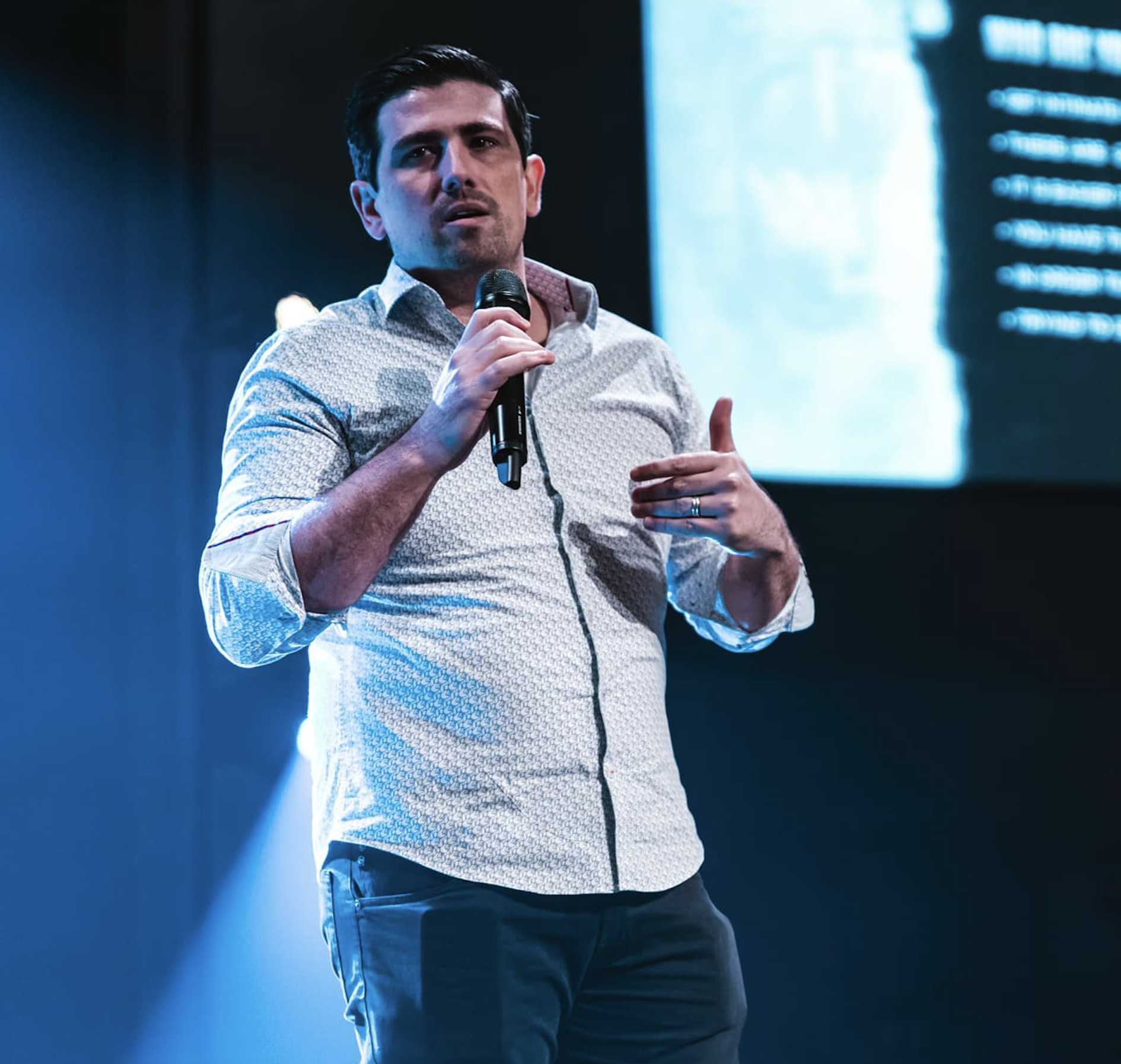
Matt Ganzak
Founder, The Sprint & ScaleUp Media
25+ years building software companies. Multiple SaaS exits. Bestselling author of The Million Dollar Plan. Writes about running AI agents for real operational work.