July 9, 2026
How Do You Trust an AI Agent That Works Without You? Anthropic's J-Space Has an Answer.
Anthropic's J-Space research lets researchers read what Claude thinks but does not say. Here's why that matters for anyone running autonomous AI agents.
The Trust Problem with Autonomous AI Agents
AI agents are getting more independent every week. Claude Cowork now runs background sessions that continue after you close your laptop. Claude Code executes multi-step workflows without real-time supervision. The entire industry is moving toward agents that act, decide, and ship while you are doing something else.
That creates a problem nobody in the feature-announcement cycle is talking about. If an agent is working autonomously, how do you verify it is actually doing what you asked?
Before last week, the honest answer was: you check the output and hope. You read the chain of thought the model chose to show you and assume it is complete. You audit results and infer intent.
On July 6, 2026, Anthropic published research that changes the shape of this problem. They found a way to read what Claude is thinking but not saying. And they open-sourced the tool to do it.
What Is J-Space (And What It Is Not)
J-Space is a small set of internal neural patterns inside Claude that function like a workspace for deliberate reasoning. It holds roughly 10 to 25 active concepts at any given moment and accounts for around 6 to 10 percent of the model's total activation variance in each layer, concentrated in the middle layers of the network. It was not designed by Anthropic. It emerged on its own during Claude's training.
The tool Anthropic built to read it is called the Jacobian lens (J-lens). It works by measuring how internal activations influence which words the model is prepared to produce, averaged across a large range of contexts. The result is a general-purpose readout of what the model is internally oriented toward at any given moment, regardless of the specific conversation.
The critical distinction: chain of thought is text a model chooses to show you. J-Space is the internal state before any tokens are produced. The model does not choose to share it. You read it with the J-lens. Those two things, what the model tells you it is thinking and what it is actually oriented toward, are not guaranteed to be the same.
That gap is exactly the trust problem operators face with autonomous agents.
J-Space is not a consciousness finding. Anthropic is explicit about this. It mirrors functional properties that neuroscientists associate with conscious access, but functional similarity is not proof of subjective experience. The value is entirely practical: a new way to inspect what a model is doing internally, before it acts.
Why Operators Should Pay Attention
Most coverage of this research has focused on the consciousness angle. That framing is interesting for philosophers and irrelevant for anyone shipping products.
Here is what matters if you run AI agents.
Auditing intent, not just output. Today, if you delegate a task to an autonomous agent, you review what it produced. That tells you what it did. It does not tell you what it was trying to do. J-Space gives researchers a way to inspect the model's internal orientation before output is generated. The difference between "what did it ship" and "what was it pursuing" is the difference between post-mortem and prevention.
Detecting internal state that differs from output. Anthropic's paper includes experiments where the J-lens revealed the model was internally tracking concepts it never mentioned in its visible response. The model held a concept in its internal workspace without verbalizing it. For safety-critical applications, that kind of signal, the ability to see what a model is oriented toward even when it does not say it out loud, is exactly what you need to build monitoring that catches mismatches early.
Scaling trust for agent autonomy. Every step toward more autonomous agents requires a corresponding step in trust infrastructure. You cannot give an agent more independence without a way to verify it is using that independence correctly. J-Space is early, but it points toward a future where trust in autonomous agents is based on observable internal signals, not just output review.
This does not mean J-Space is production-ready. Anthropic's results are research, not a deployed safety control. But the direction matters for anyone making architecture decisions about how much autonomy to give their agents and what guardrails to build around them.
What This Means for the Next Year of Agent Development
The industry is moving fast on agent autonomy and slowly on agent trust. Background agents, scheduled tasks, multi-agent orchestration, agent-to-agent coordination. All of it ships the capability to do more, independently. Very little of it ships the infrastructure to verify what agents are actually doing.
J-Space is one signal that the verification side is catching up. The code is open-sourced under Apache 2.0. The paper has 16 authors. This is not a side project. It is a significant investment in interpretability infrastructure.
For operators, the practical takeaway is not "go deploy J-lenses today." It is: the tools for verifying agent behavior are getting real. Trust is the fourth layer of the complete system for running AI agents on real work. Build your agent workflows with the expectation that trust verification will become a standard layer in the stack, not an afterthought.
That means logging agent reasoning, structuring agent memory so decisions are auditable, and designing human-in-the-loop checkpoints at the right moments. Not because the models are untrustworthy. Because trust at scale requires evidence, and the tools to produce that evidence are arriving.
How This Connects to Focus Pilot
I am building Focus Pilot as a control center for AI agents. One of the core design problems is exactly this: when you have multiple agents running, sharing context, and making decisions autonomously, how do you verify the system is doing what you intended?
Right now, Focus Pilot handles this through layered memory and structured context sharing between agents. Agents log their reasoning. You can audit the chain of decisions. That is the output-review approach, and it works for current workflows.
J-Space points to where verification is heading. Internal-state inspection before output. That is the kind of infrastructure that separates "agents that work" from "agents you can rely on." I am building with this direction in mind.
If you want to watch that play out in real time, inside a live product build with weekly updates, The Sprint is a dollar to try.
Frequently Asked Questions
- What is Anthropic's J-Space?
- J-Space is a small set of internal neural patterns inside Claude that function like a mental workspace. It holds a few dozen concepts the model can reason with but does not write down. Anthropic reads it using an interpretability technique called the Jacobian lens. It emerged during training, not by design.
- Does J-Space mean Claude is conscious?
- No. Anthropic is explicit that this research does not prove consciousness or subjective experience. J-Space mirrors functional properties described by consciousness theories, but functional similarity is not proof. The practical value is in safety and interpretability.
- Why does J-Space matter for people building AI agents?
- As AI agents run more autonomously, the ability to verify what an agent is actually pursuing becomes critical. J-Space is the first technique that reads a model's internal orientation before output is produced, rather than auditing output after the fact.
Related Articles
July 9, 2026
AI Agent Workflows: The Complete System for Running Autonomous Agents on Real Work
July 9, 2026
What Is Claude Cowork? The Background AI Agent That Keeps Working After You Close Your Laptop
July 9, 2026
Loop Engineering in Claude Code: The Practical Guide to /loop, /goal, and Scheduled Tasks
I'm building this in public. Come build with me.
The Sprint: Focus Pilot, live weekly mentorship, and a community of operators who ship with AI.
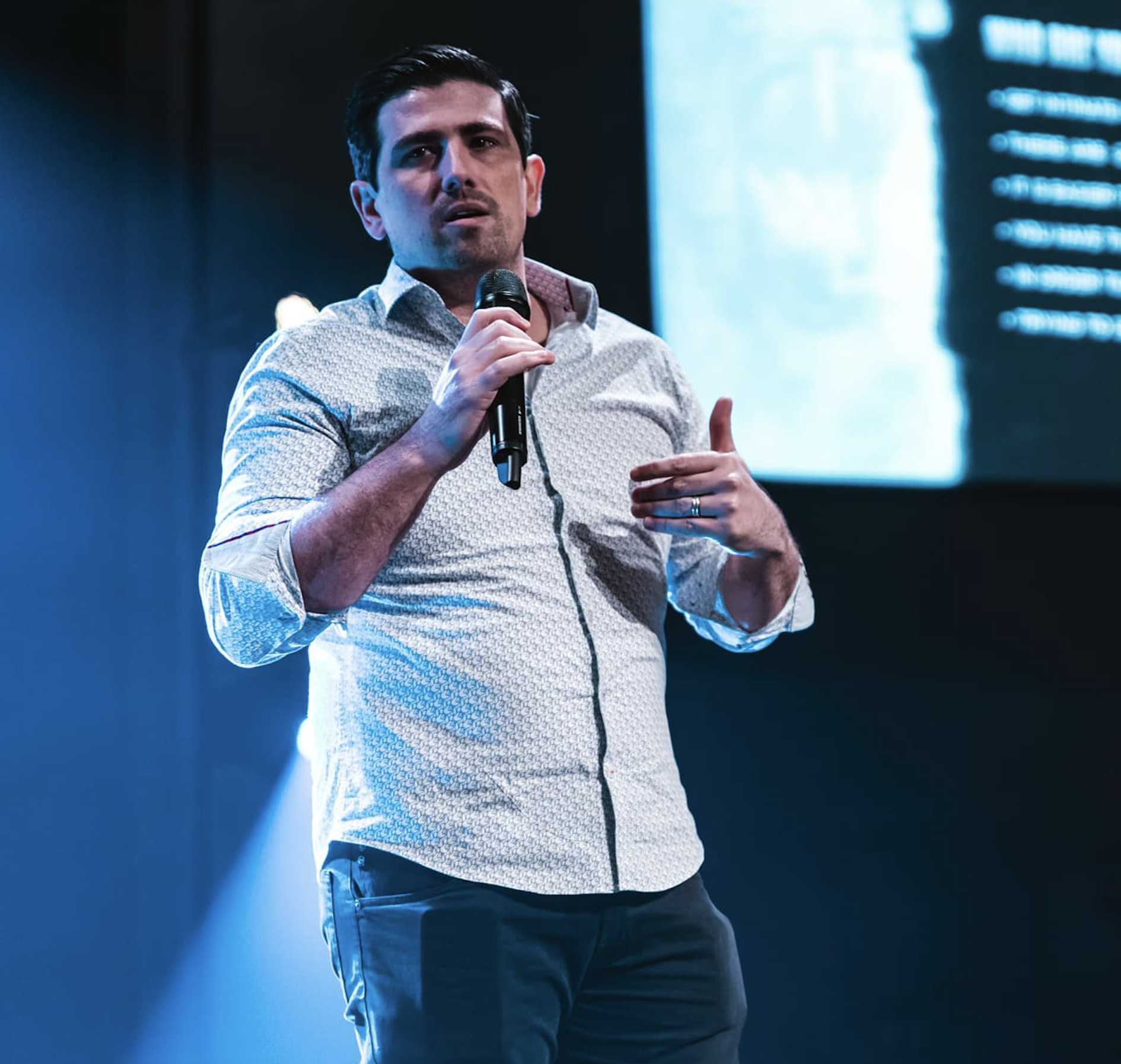
Matt Ganzak
Founder, The Sprint & ScaleUp Media
25+ years building software companies. Multiple SaaS exits. Bestselling author of The Million Dollar Plan. Writes about running AI agents for real operational work.